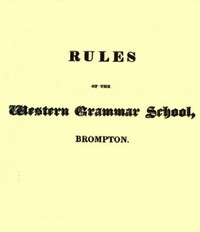
Rules of the Western Grammar School, Brompton Book Summary
One of the most striking aspects of the book is the emphasis on hierarchy and deference. The rules weren't simply about right and wrong; they were about knowing your place within the school's social structure. Older boys had privileges and authority over younger ones, and all boys were expected to show respect to the masters. For example, younger boys were required to stand aside on the stairs to let older boys pass, and address the masters as 'Sir.' This rigid system was designed to instill a sense of order and prepare boys for their roles in a similarly stratified Victorian society.
The book also reveals the importance of routine and discipline in Victorian education. The day at Western Grammar School was meticulously scheduled, with specific times for rising, lessons, meals, and recreation. Even seemingly minor actions, like passing notes or speaking without permission, were subject to strict penalties. The goal wasn’t necessarily to foster creativity or independent thought, but to cultivate habits of obedience, punctuality, and self-control. Punishments ranged from lines and caning to extra work and detention, demonstrating the seriousness with which these rules were enforced.
A third key lesson lies in understanding the prevailing attitudes towards morality and character building. Many rules focused on preventing dishonesty, bullying, and other forms of misconduct. The school aimed to mold the boys into ‘gentlemen’ – individuals possessing qualities like integrity, courage, and piety. The emphasis on confession and public shaming for wrongdoing highlights the Victorian belief in the power of social pressure to shape character. A boy caught stealing, for instance, would not only be punished but also required to confess his transgression to the entire school.
Finally, the book demonstrates the practicalities of running a large boarding school in the 19th century. Rules addressed everything from the care of school property (like desks and books) to the prevention of fires and the management of illnesses. The detailed regulations concerning food, clothing, and lodging provide a window into the logistical challenges of providing for a large group of boys away from their families. It’s a reminder that education, even in its most formal and disciplined forms, requires a considerable amount of organization and management.
- History buffs: If you're interested in Victorian England and social history, this book is a treasure trove of detail.
- Education enthusiasts: Those curious about the evolution of schooling and the methods of Victorian educators will find this fascinating.
- Readers of social commentary: The rules offer a revealing look at Victorian values and expectations.
- Those who enjoy unique perspectives: It's not a typical novel, but a unique document offering insight into a specific institution.
| Reading on Gutenburg | Free reading |
| Get Paperback Version on Amazon | Buy a book |
| Suggest Book : Sapiens: A Brief History of Humankind Book | Get on Amazon |