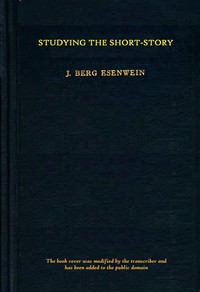
Studying the short-story Sixteen short-story classics with introductions, notes and a new laboratory study method for individual reading and use in colleges and schools. Book Summary
One of the most significant lessons is the importance of close reading. Selden's method isn't about simply reading for enjoyment (though that's valid too!). It's about meticulously examining *how* the author achieves their effects. He emphasizes identifying key phrases, analyzing sentence structure, and understanding the implications of seemingly minor details. For example, in analyzing Maupassant's 'The Necklace,' the 'Laboratory Study' would prompt you to consider the significance of Madame Loisel's initial desires and how they shape her tragic fate, rather than just accepting the plot at face value.
The book also highlights the power of narrative structure. Selden breaks down stories into their fundamental components, demonstrating how plot, character, and setting work together to create a cohesive whole. He stresses the importance of identifying the inciting incident, rising action, climax, falling action, and resolution. This isn’t just formulaic; it's about understanding *why* authors choose to reveal information in a certain order and how that impacts the reader’s experience. Consider Chekhov’s stories, often subtle in their plot, where the 'Laboratory Study' encourages pinpointing the turning points in a character’s internal state.
Furthermore, Selden emphasizes the role of point of view in shaping a story’s meaning. He explores how different narrators—first-person, third-person limited, third-person omniscient—influence our understanding of events and characters. He shows how a biased narrator can create irony or suspense, while an objective narrator can offer a more detached perspective. Analyzing Kipling's stories through this lens reveals how his imperial perspective is subtly woven into the narrative, even when seemingly presenting a neutral account.
Finally, the book implicitly teaches the value of context. While not explicitly a focus on author biography, the introductions to each story provide some historical and cultural background. Selden shows that understanding the time period and social norms in which a story was written can illuminate its themes and motivations. This understanding is crucial when approaching older works like those included here, as assumptions and values have changed significantly over time.
- Students of literature: Especially those new to formal literary analysis.
- Aspiring writers: To learn how successful authors craft their stories.
- Readers who want to deepen their appreciation of the short story form: If you enjoy short stories and want to understand *why* they work, this is a great resource.
- Those interested in the history of literary criticism: It offers a window into how short stories were taught and analyzed in the early 20th century.
| Reading on Gutenburg | Free reading |
| Get Paperback Version on Amazon | Buy a book |
| Suggest Book : The Art of the Short Story Book | Get on Amazon |