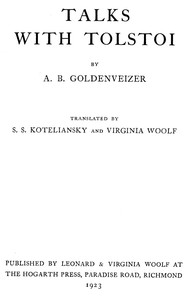
Talks with Tolstoi Book Summary
The Illusion of Art and its Potential for Harm: Tolstoy vehemently argues that art, as it was traditionally understood and practiced, is often a deceptive and even harmful pursuit. He believed that 'good' art should unite people in shared feelings of brotherhood and simplicity, while 'bad' art – the art of the elite – serves to divide and reinforce existing social hierarchies. He saw elaborate operas, ornate paintings, and complex novels as catering to the vanity and superficiality of the upper classes, distracting them from the real issues of poverty and injustice. This isn't a dismissal of creativity, but a radical re-evaluation of its purpose. He wasn't against all art, but against art that didn't contribute to moral improvement and social unity.
The Importance of Manual Labor and Simplicity: A recurring theme throughout the talks is Tolstoy’s conviction that true happiness and spiritual understanding come from living a simple life connected to the land and engaging in honest, manual labor. He himself attempted to live this way, learning carpentry and shoemaking, and encouraging his family and peasants to do the same. He saw intellectual work as often leading to pride and detachment from reality, while physical labor grounded individuals in the essential truths of existence. This wasn't merely about practicality; it was a spiritual discipline aimed at overcoming ego and fostering empathy.
Critique of Government and Violence: Tolstoy was a staunch pacifist and a vocal critic of all forms of government, which he viewed as inherently based on violence and coercion. He believed that governments existed to protect the interests of the ruling class, not to serve the common good, and that participation in government – even through seemingly benign means like voting – inevitably involved complicity in injustice. He advocated for non-resistance to evil, arguing that violence only begets more violence and that true change can only come through a moral transformation of individuals. This is powerfully illustrated by his interpretations of the Gospels, emphasizing Jesus’s teachings of love and forgiveness.
The Search for a Rational Faith: Tolstoy underwent a profound spiritual crisis in his later life, rejecting the dogma and rituals of the Orthodox Church as irrational and hypocritical. He embarked on a relentless search for a faith grounded in reason, morality, and universal principles. He studied various religions and philosophies, ultimately developing his own unique blend of Christianity, Eastern thought, and ethical principles. He believed that true faith wasn't about blind acceptance of authority, but about a personal and ongoing quest for truth and meaning. This search is vividly portrayed in the book, showing his struggles and evolving understanding.
- Are interested in the philosophical and religious development of Leo Tolstoy.
- Enjoy exploring challenging ideas about art, morality, and society.
- Appreciate intimate, conversational accounts of a great thinker's inner life.
- Are open to questioning conventional wisdom and considering alternative perspectives.
- Are fascinated by the lives of historical figures and their struggles with faith and meaning.
| Reading on Gutenburg | Free reading |
| Get Paperback Version on Amazon | Buy a book |
| Suggest Book : Sapiens: A Brief History of Humankind Book | Get on Amazon |